
When Gulf International Shipping handles land freight from Saudi Arabia to Syria, your goods or furniture go onto a Saudi truck in your own city, exit the Kingdom at Al-Haditha or Halat Ammar, and run through Jordan under transit as far as the Jaber post; in the Nassib customs yard they then switch to a licensed Syrian truck, which covers the remaining distance to the consignee. Damascus is roughly 4–7 working days away from Tabuk, 6–9 from Madinah, 7–10 from Riyadh, Jeddah, Makkah and Taif, and 8–11 from Dammam. At Gulf International Shipping, shared-truck freight starts from SAR 4.6 per kg, a 25 kg carton from SAR 165, a bedroom set from SAR 1,100, and a whole household on its own truck from SAR 4,140.
We wrote this for anyone who wants to know what happens to their cargo on the road before they pay for it: a trader stocking a warehouse in Aleppo, a family sending its belongings to the Damascus countryside, an engineer bringing solar panels to Homs. We walk through the route gate by gate, explain why the truck changes at Nassib, and put prices, transit times and paperwork into tables you can come back to.
In short
- Route: Your city → Al-Haditha or Halat Ammar → the Jordanian transit road → Jaber/Nassib → your Syrian address
- Truck transfer: Saudi trucks do not currently drive into Syria, so the box is unloaded at Nassib and reloaded onto a Syrian truck with our agent present
- Distance to Damascus: About 650 km from Tabuk, 1,600–1,750 km from Riyadh and 1,750–1,850 km from Dammam, depending on road and crossing
- Transit time: 4–11 working days to Damascus depending on the loading city, plus 2–4 days for Aleppo, the coast and the northeast
- Prices: Shared freight from SAR 4.6 per kg, a 25 kg carton from SAR 165, a dedicated truck from SAR 4,140
- Air freight: To Damascus and Aleppo airports from SAR 23 per kg, 3–5 days door to door
- Cars: Only new cars that meet the import decision in force; used-car imports into Syria are currently suspended
Truck route: the Kingdom → Jordan → Nassib → Syria · Time: 4–11 working days · 0568829975
How does a truck travel from Saudi Arabia to Syria?
There is no border crossing between Saudi Arabia and Syria, so every road shipment has to pass through Jordan. At Gulf International Shipping we split the journey into four legs, each with its own authority and its own paperwork. Knowing them explains why one shipment takes longer than another, and why we ask for certain documents before loading rather than after.
Leg one: from your city to the Saudi border
Trucks loaded in Riyadh, Qassim, Ha’il and the Eastern Province normally exit through the Al-Haditha port near Qurayyat in Al-Jouf, facing Jordan’s Al-Omari post. Loads starting in Tabuk and its region, along with many from Madinah, Jeddah and Makkah, usually leave through Halat Ammar north of Tabuk, opposite Jordan’s Al-Mudawwara. Before the truck sets off for the border we lodge the export declaration on Fasah and book an arrival slot, because the port receives each truck within a set window around its appointment.
Leg two: crossing Jordan without unloading
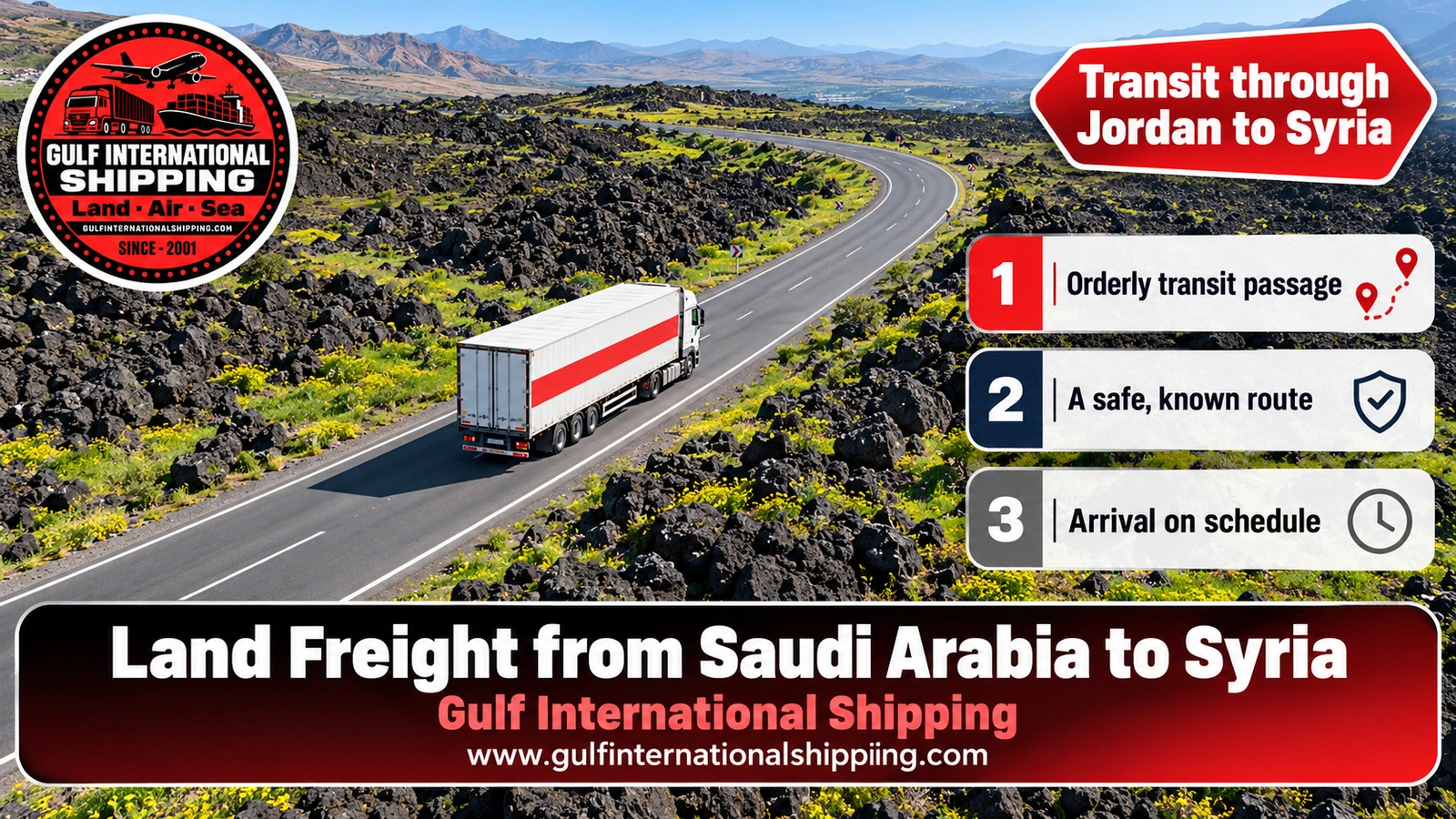
Past Al-Omari or Al-Mudawwara the truck runs through Jordan as transit cargo: the cargo is not entered for sale in Jordan, and the box is opened only if customs decides to inspect it. From Al-Omari the road heads north via Azraq and Mafraq; from Al-Mudawwara it passes Ma’an and Amman before the two routes meet near the northern border. The customs seal stays on the box door the whole way, and our team follows the truck’s position until it reaches Jaber.
Leg three: Jaber, then Nassib
Jaber is the Jordanian post and Nassib the Syrian one facing it; people name them together because they are two gates of the same crossing. It runs around the clock, seven days a week. Exit formalities for Jordan are completed first, then Syrian customs entry. This is where the truck-to-truck transfer described below takes place, the Syrian customs declaration is lodged, and any duties due on the goods are paid.
Leg four: from Nassib to the consignee
The first governorate after the border is Daraa, and Damascus lies about 100 km further north. From the capital the roads fan out: Homs about 162 km, Aleppo about 362 km and Latakia about 332 km via Homs and Tartus. The Syrian truck delivers to the agreed address, and our agent calls the consignee ahead of arrival to fix an unloading time.
What is the Nassib truck transfer and why does it affect your cargo?
The transfer, known locally as munaqala, means moving the load from one truck to another inside the customs yard. The Syrian authorities do not currently allow non-Syrian trucks, Saudi ones included, to enter the country to unload; only transit traffic bound for a third country is exempt, under customs escort. In practice our truck stops in the Nassib yard, a licensed Syrian truck pulls up beside it, and the goods move across under customs supervision.
Gulf International Shipping books the Syrian truck before our load reaches the border, so cargo never sits in the yard without onward transport. An agent attends the transfer, counts and arranges the pieces, checks them against the loading list and photographs the cargo once it is stowed in the new truck. The step usually adds anything from a few hours to a full day depending on congestion, and it is now a fixed part of every Saudi shipment’s journey.
Why should you care? Because your shipment is loaded twice and unloaded twice. That is why we wrap furniture and appliances in layers built to survive a second round of lifting and stacking, number every piece, mark each carton with the consignee’s name and city, and put commercial goods on shrink-wrapped wooden pallets so a forklift can move them as one unit instead of carton by carton.
Be wary of “Saudi truck straight to Damascus” offers
Any company promising that its Saudi truck will unload outside your house in Damascus or Aleppo is describing a route that is not open right now. The right questions before you pay: who handles the transfer at Nassib, who books the Syrian truck, and is that included in the price? At Gulf International Shipping the answer is simple: we arrange it, and it is part of the price we quote.
Full truck or shared load to Syria?
The first decision in any road shipment is how much space you need. A shared load (LTL) means your goods travel with other customers’ cargo and you pay only for the volume or weight you take up. A full truckload (FTL) is yours alone: loaded at your door, sealed and dispatched straight away.
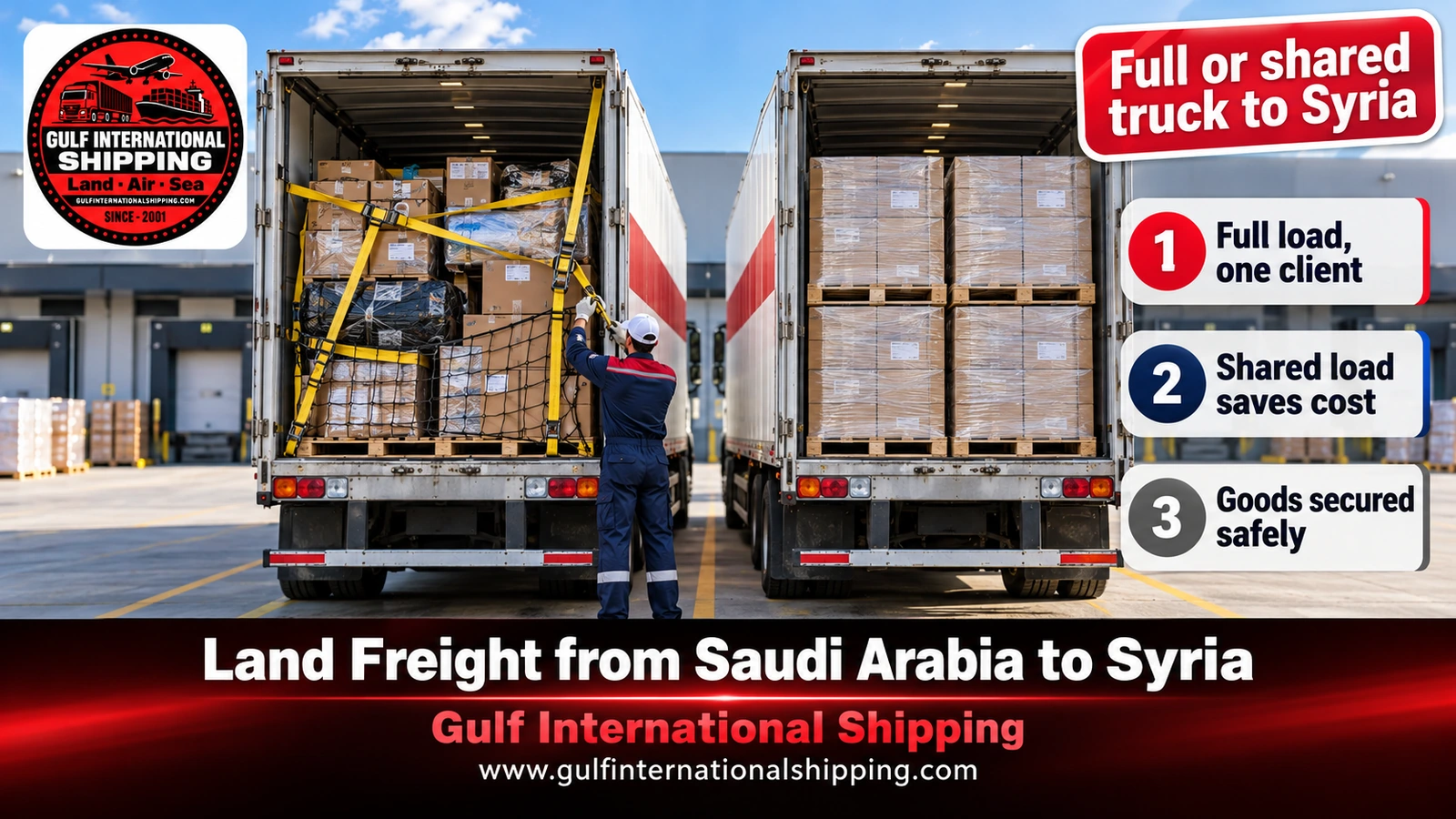
Our rule of thumb: once your cargo approaches half a truck box or more, compare both prices before choosing, because a dedicated truck can turn out cheaper and faster at the same time. If your goods are fragile or high-value, a dedicated truck also means fewer hands touching them in the Nassib yard.
Approximate costs: trucking cargo from Saudi Arabia to Syria
We built our prices on what freight companies publish for Syria from Riyadh, Jeddah, Madinah and Tabuk, and set Gulf International Shipping’s starting point below them. Each cell shows two figures: the smaller is what we charge from, the larger is the typical top end once volumes rise or the Syrian address is further out.
Note: a truck usually reaches Damascus in 4–7 working days starting from Tabuk, 7–10 days for Riyadh, Makkah, Jeddah and Taif, and 8–11 days for Dammam, while flights deliver to the door in 3–5 days.
Starting prices for the most requested items
Prices start lowest from Tabuk and Madinah and rise the further the loading city is from the Jordanian border; delivery to Aleppo, Latakia or Hasakah costs more than to Damascus or Daraa. City-by-city tables are on shipping prices from Saudi Arabia to Syria.
Land freight transit times from Saudi Arabia to Syria by city
At Gulf International Shipping the transit time adds up three parts: the drive to the Saudi border, the run through Jordan, and the time at Jaber and Nassib including the transfer and clearance. Driving time is fairly fixed for each city; the border is the variable part, shaped by how many trucks are queuing, expansion works in the yards and whether the paperwork is complete.
These kilometre figures are rounded and shift with the route and pickup point. Loads from Qassim, Ha’il and Al-Jouf take about as long as Riyadh or less, since they sit on the same road to Al-Haditha.
How many days does the Syrian city add?
A shared load adds roughly 3–5 days for the weekly trip to fill and for sorting after the transfer. We tell customers plainly: the crossing operates 24 hours a day, though queues can add a day or more in peak periods and while the yards are being expanded. So our quotes give a window of days, not a fixed date, and we update you each time the truck clears a stage.
What goods do we carry by road to Syria?
A closed box truck suits most cargo headed for Syria; what changes from one item to the next is packing and paperwork, not the route. These are the categories Gulf International Shipping moves most often on this lane:
- Trade and warehouse stock: dry food, detergents, clothing, housewares and cosmetics, palletised and sent as a full or shared load with a commercial invoice and packing list.
- Building and finishing materials: tiles, sanitary ware, doors, non-flammable paints and workshop tools; heavy items are spread across the floor of the box so the truck stays within its legal weight.
- Solar power systems: panels, batteries and inverters are among the most requested items for Syria. Panels travel upright in wooden crates; batteries need clear technical data because some types are treated as dangerous goods.
- Medical furniture and equipment: beds, wheelchairs and clinic devices, packed against shocks and accompanied by origin and specification documents.
- Vehicle and machinery spare parts: boxed in numbered cartons with a list of part numbers, since Syrian customs classifies them line by line.
- Online-store orders: many small parcels for different recipients, which we consolidate and then sort by governorate after Nassib.
- Household furniture and appliances: bedrooms, majlis seating, kitchens, fridges and washing machines, with dismantling, packing and reassembly. Full details on furniture moving from Saudi Arabia to Syria.
Refrigerated freight to Syria
Dates, cheeses, packaged sweets and some medicines need a steady temperature for the whole trip. For these we arrange a reefer truck set to the right temperature for the product, and plan the timing more tightly, because the transfer at Nassib must also go into a refrigerated Syrian truck. Reefer pricing depends on quantity, temperature range and the Syrian city — send the details and ask for your quote.
Shipping cars by road to Syria: what is possible today?
We start with the eligible cases so “car shipping” is not misread. At present, used cars are not being let into Syria for local registration; what is accepted is new cars whose model year falls inside the window of the current import decision. Motorcycles of every kind are barred. An expatriate who wants to drive their own car during a visit can use the temporary-entry system, subject to its conditions and time limit.
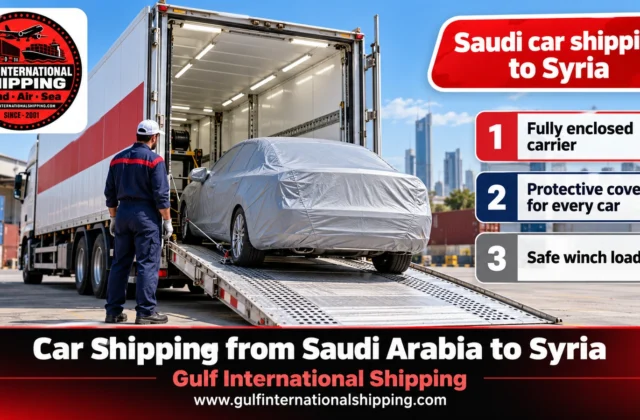
For these eligible cases Gulf International Shipping loads the car onto a covered or open transporter as far as Nassib and handles the Saudi export paperwork through Absher and Fasah. An eligible sedan costs from SAR 3,220 to move, SUVs start at SAR 4,140 and luxury models at SAR 5,520. Syrian customs duty is set by the tariff in force and the engine type. More on car shipping from Saudi Arabia to Syria.
About the rumours
Every so often posts circulate claiming used-car imports have reopened for a token fee. Before buying a car to ship, confirm with the official Syrian authorities that such a decision really exists; we will tell you what we know when you call.
Air freight to Syria: when does it beat the road?
A truck is the economical option for anything heavy or bulky, but urgent papers, personal medicines and a spare part that is holding up a factory cannot spend a week on the road. For those, Gulf International Shipping offers air freight from Riyadh, Jeddah, Dammam, Madinah and Taif airports to Damascus, and from Riyadh to Aleppo, on whichever direct flights the airline timetable offers.
- Air rate per kg: from SAR 23, with 10 kg parcels starting at SAR 230.
- Time: 3–5 days to the consignee, with around two hours of flying from Riyadh and a little more from Jeddah.
- Chargeable weight: actual or volumetric, whichever is higher, so air suits small, relatively heavy items.
Airports, volumetric weight and packing are covered in air freight from Saudi Arabia to Syria.
What about sea freight?
Importers of full commercial containers can ask us to route them by sea to Latakia or Tartus on services that call at intermediate ports, though the voyage runs weeks longer than the road. Furniture, cars and parcels stay on the Jordan road, which is shorter and simpler to clear.
Documents required for land freight to Syria
The paperwork depends on what you ship, and missing documents are the most common reason a truck is held at the border. Have them ready before loading day and we will go through them with you line by line:
The exporter also issues an electronic authorisation to us on Fasah so we can lodge the declaration in your name. Nassib-specific requirements are detailed in our Nassib border crossing guide.
Do you pay customs on goods and furniture in Syria?
Commercial goods and new furniture or appliances are subject to Syrian customs duty under the unified tariff in force, and the rate varies line by line, so nobody should quote you a single percentage for everything. We ask for an accurate list of items and values, and give you a duty estimate through the broker at Nassib before loading.
Syrians returning to settle permanently may take their used furniture and personal belongings in without duty if they have lived abroad for six months or more, had their goods list stamped at a Syrian embassy or consulate in Saudi Arabia, the owner present, quantities suited to one family, and a one-time benefit. A new Syrian customs law has been issued, so we confirm the conditions with customs before shipping. The full explanation is in Syria used household goods customs.
Banned and restricted cargo on the Syria road
- Motorcycles of all types, new or used.
- Weapons, ammunition and their parts; narcotics.
- Walkie-talkies and remote-controlled toys such as drones, cars and small boats.
- Goods of Israeli origin.
- Gas cylinders, chemicals and flammable liquids.
- Large amounts of cash without a permit.
- On the Saudi side: antiquities, subsidised goods and anything barred from export.
This list covers the main restrictions and is not exhaustive; some items such as binoculars or special electrical equipment may be restricted or dutiable. Not sure about an item? Run it past us before packing.
Delivery inside Syria, from Daraa to Qamishli
After the transfer the Syrian truck heads for the requested governorate, and Gulf International Shipping delivers across all of them as road access allows. Main delivery areas:
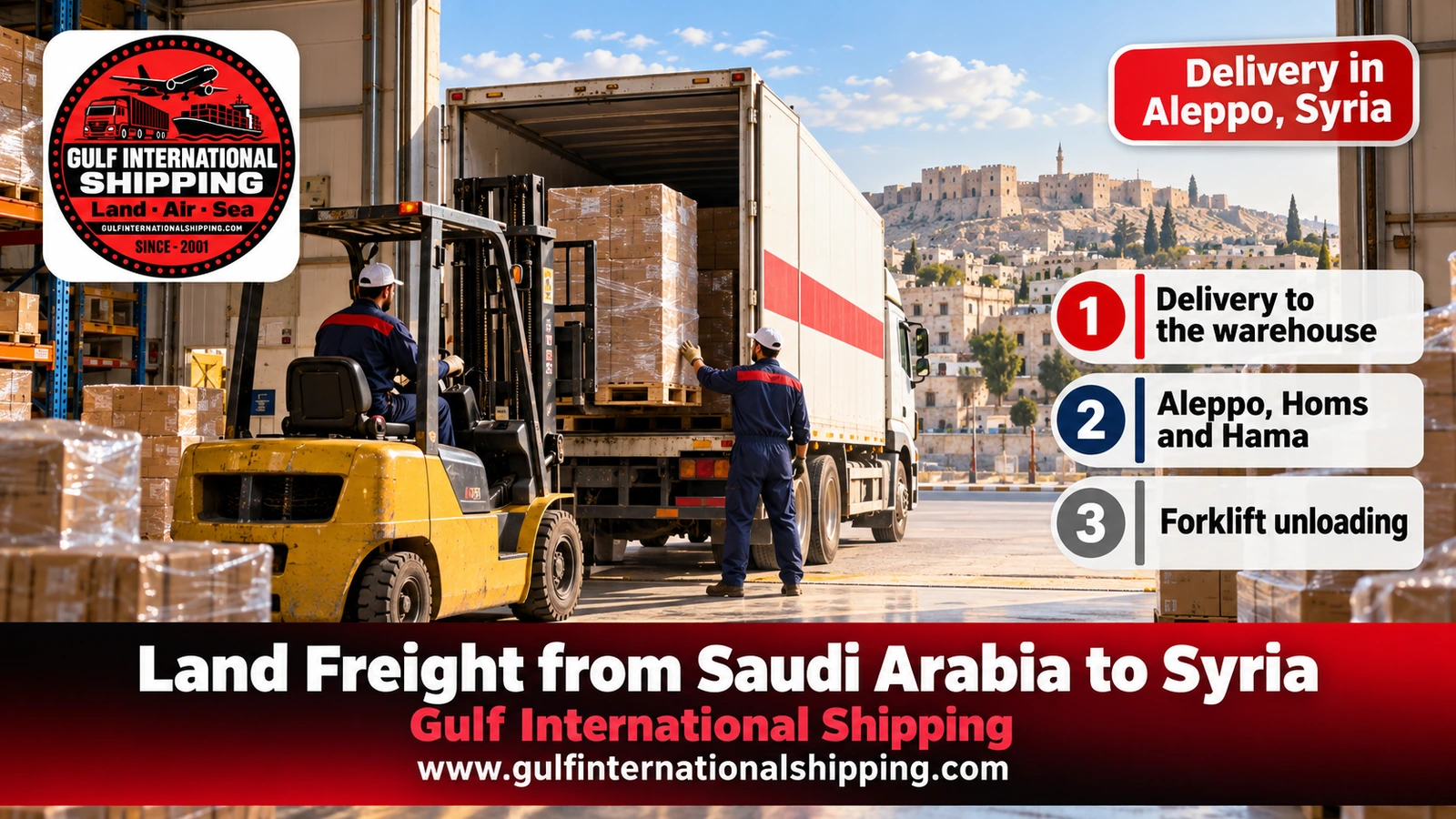
Warehouses and shops receive pallets by forklift at the gate; homes get their goods carried inside. If the address is in a narrow street a big truck cannot enter, we finish with a smaller vehicle and tell you in advance.
How to book a truck to Syria with Gulf International Shipping
- 1Describe the shipment
Type of goods, rough weight or photos, loading city and Syrian governorate, by WhatsApp on 0568829975. - 2Choose the load type
We suggest a shared load or a dedicated truck based on volume, with the price, transit time and next departure. - 3Prepare papers and authorisation
ID or CR, invoice and packing list, Fasah authorisation and consignee details. - 4Packing and loading
Our crew comes to you, wraps, numbers and loads, and hands you a piece list and photos of the load. - 5Export clearance and transit
Export papers filed, border slot reserved, and the truck heads through Jordan under transit to Jaber. - 6Transfer and clearance at Nassib
Our agent moves the load to the Syrian truck and follows clearance and payment of any duties due. - 7Delivery
The driver calls the consignee before arrival and everything is handed over against a signature on the piece list.
Working out what your Syria road shipment will cost
Five things set the price of a road shipment at Gulf International Shipping: volume or weight (whichever is charged higher), shared or dedicated load, the Saudi loading city, the Syrian governorate, and extras such as dismantling, wooden crating and insurance. Commercial goods also carry whatever duties Syrian customs assesses.
A worked example: a trader sends 400 kg of clothing on a shared load from Riyadh to Damascus. At the starting rate of SAR 4.6 per kg the cost begins at about SAR 1,840, rising if the cargo is bulky for its weight or if delivery is to Hasakah rather than Damascus. Insuring goods worth SAR 30,000 starts at SAR 270 at 0.9%.
What is the cheapest way to send freight to Syria by road?
- If time is flexible, go shared; it starts from SAR 4.6 per kg.
- Cut the volume: dismantle furniture and leave behind empty boxes and items that are easy to buy in Syria.
- Load from the city nearest the border if you have a base there; Tabuk is cheaper than Dammam or Riyadh.
- Book early, ahead of holiday and Eid seasons when the crossing is busy and trucks are scarce.
- Combine your shipment with a relative’s or neighbour’s going to the same governorate.
Mistakes that delay road freight to Syria
- A vague contents list: “household items” is not enough for customs; write the item and the count.
- Single-use packing: thin cartons collapse at the second handling; use double-wall boxes.
- Incomplete consignee details: a Syrian number nobody answers means the truck waits on arrival.
- Undeclared batteries or restricted items: one barred item can hold the whole load at inspection.
- Late embassy certification: a returnee who ships before the list is certified loses the exemption.
Tracking, insurance and storage
Gulf International Shipping tracks its trucks by GPS up to the crossing and messages you when the truck leaves the Saudi port, reaches Jaber, completes the transfer and when the Syrian truck sets off. Insurance is optional and starts at 0.9% of declared value; we recommend it for appliances and valuable goods. If your home in Syria is not ready yet, we can keep your belongings in our warehouses in the Kingdom until you set a shipping date.
Can you ship from Syria to Saudi Arabia?
Yes. We arrange the reverse direction for goods and belongings allowed into the Kingdom, with a transfer at the crossing and transit through Jordan to the Saudi port. Price and paperwork depend on the shipment — ask for your quote.
Why Gulf International Shipping on the Syria lane?
We arrange the transfer
A Syrian truck booked before your load reaches Nassib, and an agent on site.
The right exit for your city
Al-Haditha for the centre and east, Halat Ammar for Tabuk and the west.
Honest timings
A realistic range for every city and governorate, with updates at each stage.
Packing for two handlings
Layers and pallets built to be loaded and unloaded twice.
Published prices
A clear starting price for every item, below the market.
Direct contact
Call or WhatsApp 0568829975 from booking to delivery.
Book space on the next truck to Syria
Send photos of the goods, your city and the Syrian governorate, and our reply will carry the price and the first free loading day.
Related Syria guides
- Main guide: shipping company from Saudi Arabia to Syria
- By city: shipping from Riyadh to Syria, shipping from Jeddah to Syria, shipping from Dammam to Syria, shipping from Tabuk to Syria, shipping from Madinah to Syria
- Crossing and prices: Nassib border crossing guide, shipping prices from Saudi Arabia to Syria
- The transit country: land freight from Saudi Arabia to Jordan
- cartons and parcels shipping to Syria, car shipping from Saudi Arabia to Syria
- all destinations, land freight service, customs clearance service, request a quote